









|
Arctic Char
Although the lakes in the North are still tarped with solid ice the fish caught in this area, in and around Great Slave Lake are of much taste and size. I have always preferred cold water fish to that of the warm, perhaps the icy waters freeze in the flavor. Any fish that is capable of serviving the fridged temperatures for months on end must be worth the time and effort of a hearty meal. Pike,perch, trout, grayling,and char, to name a few, are tasty in these parts of the world. A thirty pound trout is not an unusual catch, and pike are upwards of forty pounds(that is a heck of a fish.) Great Slave Lake is the deepest body of water in North America. It is a fresh water lake, and is almost 300 miles in length. The entire length of the lake is dotted with fishing camps...it is a true fishermans dream. Although the mosquitos seem to outweigh the fish it is an experience well worth the effort of slathering yourself in Deep Woods Off!After all it is the seventh largest lake in the world! June to September is the prime time for the fishing rods to be in full use..and with a quick flight from the capital city of the Northwest Territories, Yellowknife, it is so worth the trip.The scenery alone is worth the airfare. Ice can cover Great Slave Lake well iinto June, however with the twenty odd hours of sunlight during the summer months the earth heats up quickly. The water does remain cold, and with some crevices in the lake some 2,000 feet in depth it is no wonder only the brave(or crazy) venture in for a swim. Lake Trout, can range in the forty pound weight class, the record is actually a whopping 59.5 pounds. Trout are meaty and fatty, with a delicious robust flavor. Little attention is necessary in cooking, broil, bake , poach, are all fine, but in a frying pan with butter and salt and pepper is the preparation of choice. Arctic Grayling average one to two pounds.Noted in some books as the most beautiful fish the skin is shiny and irredecent.Extremely delicate in taste and texture, a must if you ever have the opportunity to try. White Fish are meaty and firm. When prepared in a beer batter(preferably Guinness) and a side of home fries you have died and gone to heaven. The world record is 12.9 pounds. Arctic Char can be compared to salmon, but I would not do that!. Char is an orangey pink color. Firm yet flakey,I would take Char over Salmon any day.. The char steaks are meaty and excellent on the BBQ but can be prepared any way you desire. BBQ,poached, fried, in pasta, or as a gravlax, whichever way you desire it will never be a disappointment. There are many other wonderous fish available in the North and the way in which you prepare your catch is entirely up to you. The recipe I have chosen is a char gravlax. There is no cooking required! The fish actually cooks itself in the salt rub which you prepare. Gravlax origionated in Sweden and is still a delicasy in those parts. You do not need char as salmon will do the trick. This preparation is simple and fast but the taste is a killer. It is salty however, so do not add extra salt in the sauce which accompanies the gravlax. Enjoy! Arctic Char "GRAVLAX" Sorrel Cream Sauce 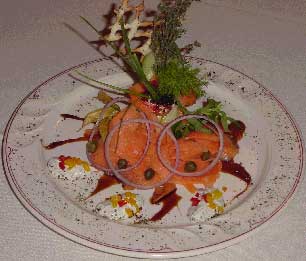
Cured Char Makes Ideal Party Fare a Swedish Specialty Making Gravlax
Note: Dill is the most common gravlax seasoning, but there are other options. Cilantro and chilies create a spicy southwestern flavor; Tarragon and basil can add a deeper herbal note. Avoid using strong seasonings like rosemary and garlic because they become overwhelming in the curing process. Only fresh ingredients are appropriate for gravlax. Salmon could also replace the char. Sorrel Sauce:
Enjoy and be wary of leprechauns selling four leaf clovers! 
|